
Fire
Fundamentals
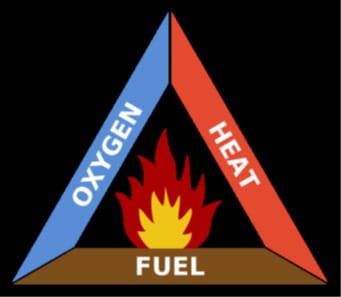
Fires require three main ingredients to be together at the same time in order to burn: fuel, oxygen, and heat. This is often shown as a fire triangle.
Removing any one of the three ingredients of the fire triangle will stop a fire. Removing heat is often the easiest and fastest thing to do in a wildfire situation, and this is done by applying water to a fire or fuel source. Water absorbs a lot of heat as it heats and boils, and this rapidly cools down a wood fire’s fuel source. This weakens both the heat and fuel sides of the triangle and stops a wood fire. Water vapour also increases the ability of air to carry heat, which adds to the heat removed by heating and boiling the water, and this removes the heat side of the fire triangle. A foam system can go one step further by isolating the supply of oxygen, which removes the oxygen side of the fire triangle.
Source: Jason Gogal, P.Eng
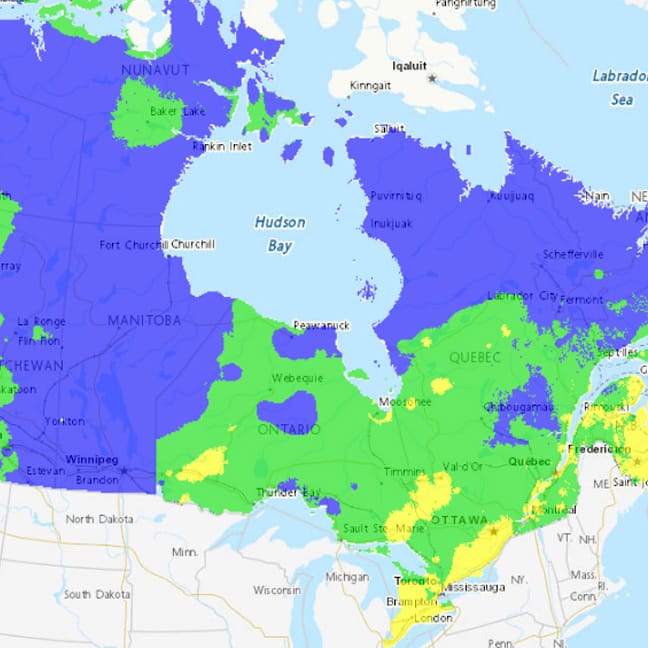
Canada Fire Map
Brought to you by Natural Resources Canada
Fire has a crucial role in shaping forests across Canada. It is a vital ecological process that supports forest health and diversity. However, wildland fires can harm our health, well-being, communities, plus cultural and economic resources.
The 2023 wildland fire season was historic.
Over 230,000 persons were evacuated because of potential dangers to life and health.
6,623 wildland fires burned more than 15 million hectares (ha) of Canada’s managed forests.
In comparison, over 8,000 wildland fires occur annually and burn an average of more than 2.1 million ha (Source: National Forestry Database).
Knowing the causes, severity and other related patterns can help us address future wildland fire challenges. (Source Natural Resources Canada)